Medical doctors and Surgeons
Vascular Diseases: From Prevention to New Treatments

Vascular diseases are not a problem that only affects older people. In fact, although the risk increases with age, chronic venous disease affects a very broad segment of the population and can develop as early as a person’s 20s or 30s.
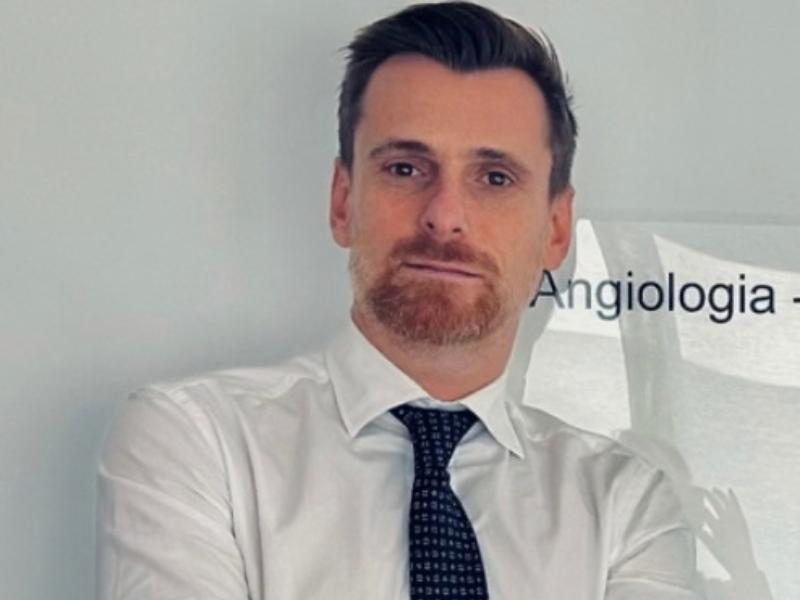
«In 2005, a scientific publication on a cohort study* conducted in 24 Italian cities showed that only 22.7% of people had no clinical signs or symptoms associated with chronic venous disease. In numerical terms, this means that, out of Italy’s 59 million inhabitants, approximately 18 million suffer from clinically visible and diagnosable venous insufficiency», explains Dr Luca Palombi, a vascular surgeon and head of the Angiology and Phlebosurgery Service at Villa Salus Hospital in Mestre, as well as co-founder of the Cura Vene Roma medical practice. «Obviously, the incidence and progression of venous disease increase over the course of our lives, but it is not uncommon to see patients in their 20s or 30s who already have clinically visible forms. Around 30–35% of the Italian population, in fact, has symptomatic varicose veins in the lower limbs, meaning around 15–18 million Italians».
Heavy and swollen legs: when are they a warning sign?
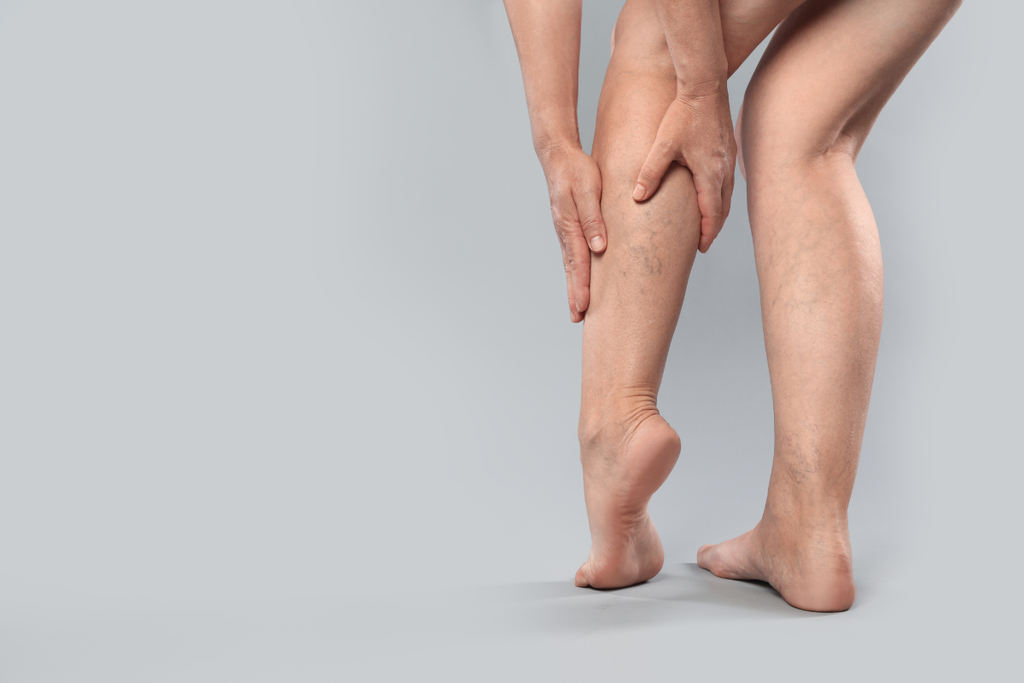
Not every episode of aching, pain, heaviness, itching or a feeling of restlessness in the lower limbs is associated with established chronic disease, particularly when the symptoms are temporary. However, the doctor stresses that «they can be a warning sign if they tend to persist or worsen over time. There are conditions that can cause these symptoms and mimic the disease, related to temperature, particularly during the summer, or periods of reduced mobility. Temporary treatments, hormonal therapies and even body weight can also be among the conditions that may cause these symptoms».
Recognising when a symptom stops being occasional is the first step towards an early diagnosis. «When these symptoms improve only with rest and with the legs elevated, when they are accompanied by the appearance of visible veins, an increase in volume, or swelling in the leg, you should consult a specialist», Palombi recommends.
Prevention starts with everyday habits
When it comes to vascular health, lifestyle is not simply a general recommendation, but an integral part of treatment. Physical activity, particularly aerobic exercise, a healthy diet and weight management all play an important role in both preventing chronic venous disease and slowing its progression.
«There are also lifestyle habits that can be changed, such as smoking, wearing unsuitable footwear, and correcting abnormalities in the way the foot bears weight or in the musculoskeletal system», Palombi explains.
It is not just a cosmetic issue
Varicose veins are often regarded as merely a cosmetic concern, but they can actually be one of the first clinical signs of a possible alteration in the internal circulation. Ignoring them means risking the neglect of a condition that, if not properly treated, can progress and contribute to serious complications such as venous thrombosis.
The doctor explains: «Venous thrombosis, if we are talking about involvement of the deep venous system or deep vein thrombosis, is the fourth leading cause of death in Western countries. Neglecting a varicose vein nevertheless exposes us unnecessarily to a risk that we can prevent».
The evolution of minimally invasive surgery
In recent years, vascular surgery and angiology have undergone significant developments, offering patients increasingly effective and less invasive treatments.
«We have moved from predominantly open surgery, which in most cases involved removing veins, to less invasive surgery where, through the use of vascular catheters, we can close off the veins and then allow the body to reabsorb them in a less invasive way», Palombi explains.
There are numerous techniques available. The doctor recalls: «We can select a thermal ablation technique such as laser or radiofrequency; an occlusion technique such as mechanochemical ablation; or, in selected cases, a true occlusion technique using special biocompatible adhesives, as well as sclerotherapy, which has always been an ally in treating our patients».
The choice of treatment is personalised according to the patient’s characteristics and discussed with the specialist in order to achieve the best possible result in the least invasive way.
Innovation also extends to conditions that were once difficult to treat, such as venous thrombosis. «Today, again from an endovascular perspective, we have the possibility of reopening, or what we call ‘recanalising’, those venous segments that have become blocked following the coagulation cascade and the formation of a thrombus inside the vein,” Palombi explains. “In cases involving compression of veins, for example in the abdomen, we can use stents to reopen the flow and thereby facilitate circulation back towards the heart».
Summer and circulation
During the summer, the sensation of heavy and swollen legs tends to become more pronounced. «Heat can be somewhat of an enemy to our circulation because it can promote vasodilation and stagnation, leading to venous blood pooling and also contributing to conditions of lymphatic stasis», the doctor explains.
For this reason, it is important to adopt a few simple measures that can help support circulation during the warmer months.
Among the most effective habits, Palombi recommends walking, preferably in water for an additional benefit. Swimming is also “one of the most suitable sports for people suffering from circulatory problems, particularly venous conditions, and at the end of the day, bathing the legs in cooler water” can also be beneficial.
The choice of clothing and footwear can also make a difference. As the doctor suggests: «We would normally never recommend shoes that are too low or completely flat. They should have a slight heel to encourage a physiological distribution of weight across the sole of the foot».
Palombi also highlights the importance of proper hydration and a diet rich in fruit, vegetables and fibre, providing an adequate intake of vitamins and antioxidants that are beneficial for circulation.
*Editor’s note: A cohort study is an observational, non-experimental type of research. Researchers divide a group of healthy people according to whether or not they have been exposed to a risk factor. They then follow the subjects over time to see who develops the disease.





Plastic Surgery Between Innovation and Reconstruction: Bari Hosts the 74th SICPRE National Congress

Vascular Diseases: From Prevention to New Treatments

Regenerative Plastic Surgery: Our Own Tissues Become Treatment

Early Diagnosis and Gene Therapy: The Breakthrough Reshaping the Future of Newborns with SMA

Facelift Surgery: Respecting the Person’s Identity

Your skin is talking to you. Are you listening?

Body Fat: Removing It Is Not Enough

Respiratory Allergies: What Is Changing?

Treating the Wound to Support Surgical Success

Quality, safety, and trust: the value of ISO 13485 certification

Biorevitalization: Beyond the Promises of Creams

Trichology: what your hair can reveal about your health

Lipedema: it’s not enough to look at body weight

Lipoedema: The Unresolved Challenge of Delayed Diagnosis

After weight loss, the body changes twice: the role of plastic surgery in body contouring

Skin cancer: warning signs not to ignore and new treatments that are changing the prognosis

Lipedema and physiotherapy in managing the condition

Mitral Valve: diagnosis and heart surgery for the patient

Cleft Lip and Palate: surgery that changes not just a face, but an entire childhood
Biorevitalization: Beyond the Promises of Creams
Lipoedema: The Unresolved Challenge of Delayed Diagnosis
Trichology: what your hair can reveal about your health
After weight loss, the body changes twice: the role of plastic surgery in body contouring
Respiratory Allergies: What Is Changing?
Lipedema: it’s not enough to look at body weight
Quality, safety, and trust: the value of ISO 13485 certification
Treating the Wound to Support Surgical Success
Body Fat: Removing It Is Not Enough
Regenerative Plastic Surgery: Our Own Tissues Become Treatment
Facelift Surgery: Respecting the Person’s Identity
Your skin is talking to you. Are you listening?
Early Diagnosis and Gene Therapy: The Breakthrough Reshaping the Future of Newborns with SMA
Vascular Diseases: From Prevention to New Treatments