Health care professionals
Breast Cancer: From Prevention to Treatment

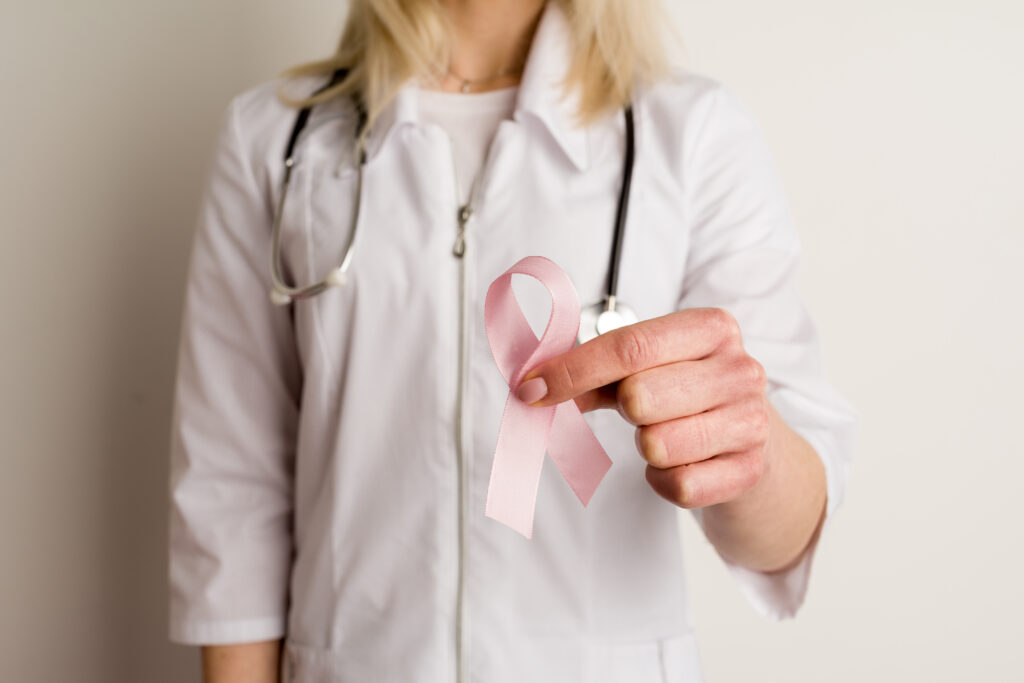
Breast cancer is not a single disease, and there is no one treatment pathway that is right for every patient. The biological characteristics of the tumour, age, overall health, lifestyle and quality of life are among the factors that help shape an increasingly personalised treatment strategy.
We discussed this with Dr Veronica Prati, Head of the Breast Oncology Unit at ASL CN2, who specialises in breast and urological cancers.
Breast cancer: a personalised approach
“Not all breast cancers are the same.” This is Dr Prati’s starting point for explaining how the approach to the disease has changed.

Broadly speaking, breast cancers fall into three main groups: luminal tumours, which express hormone receptors; HER2-positive tumours, characterised by HER2 overexpression or gene amplification; and triple-negative tumours, which test negative for both hormone receptors and HER2. These biological differences guide the choice of very different treatments.
Understanding the tumour, however, is only part of the picture. “We must always consider the different factors relating to both the disease and the patient together,” the oncologist emphasises. Age, coexisting medical conditions, the ability to follow treatment plans and to recognise potential side effects all contribute to treatment decisions.
Personalisation also means listening. Patients have different needs in their daily lives, and preserving their quality of life, as far as possible, becomes an integral part of treatment planning. “We need to listen to our patients to understand which aspects of their everyday lives matter to them and should, wherever possible, be preserved,” Prati explains.
Treatment before surgery: the neoadjuvant approach
In some cases, breast cancer treatment begins before surgery. This is known as neoadjuvant therapy, an approach that takes into account both the extent of the disease and its biological characteristics.
“The purpose of neoadjuvant therapy is not simply to improve the surgical approach,” Prati explains. Particularly in triple-negative and HER2-positive breast cancers, the response to treatment before surgery also provides valuable information to guide subsequent treatment.
In the past, one of the main objectives was to shrink the tumour to make breast-conserving surgery possible. Today, preoperative treatment has a broader role.
One aim may be to reach surgery with no residual tumour detected on pathological examination, achieving what is known as a pathological complete response. As the oncologist explains, scientific evidence shows an association between this outcome and the patient’s prognosis.
Treating breast cancer involves more than surgery
One of the messages Prati stresses most strongly is the need to move beyond the idea that surgery alone constitutes the entire treatment.
“Breast cancer treatment does not end with surgery,” she emphasises. Care is multidisciplinary and may combine surgery, medical treatments and, when needed, radiotherapy.
The shift towards increasingly conservative surgery has gone hand in hand with the development and integration of other treatment options. The care pathway is therefore tailored to each patient, with the aim of controlling the disease while taking the other aspects of her life into account.
Prevention and early detection
Preventing cancer and detecting it early are not the same thing. Primary prevention addresses modifiable risk factors, while secondary prevention aims to identify an existing disease at the earliest possible stage.
For primary prevention, Dr Prati highlights the importance of lifestyle: avoiding smoking, eating a balanced diet, limiting alcohol consumption and being physically active. In her view, awareness should begin early.
“Education about these lifestyle habits should start at school age,” she observes.
Screening has a different role: it helps detect existing lesions early, allowing diagnostic assessment and treatment to begin promptly. “Detecting them early allows us to initiate the entire diagnostic and treatment pathway sooner,” Prati explains.
Balancing cancer control and breast preservation
Effectively treating the disease remains the priority, but modern medicine also considers the impact that treatment can have on a woman’s body and psychological wellbeing.
According to Prati, finding the right balance once again depends on personalisation and multidisciplinary care.
“Multidisciplinary care is now fundamental—not only in breast cancer—to personalising treatment and finding the right balance between effective cancer treatment and preserving the patient’s quality of life,” she explains.
In breast cancer, appearance is another consideration, and the oncologist cautions against dismissing it as superficial. The breast is closely connected to body image and a sense of femininity, and changes to it can add to the psychological impact of the diagnosis.
For this reason, when it is oncologically appropriate, preserving the appearance of the breast can help women adjust to changes in their bodies. Psychological support can also play an important role within multidisciplinary care, particularly because distress and fear are not always immediately apparent during consultations.
Challenging common myths
Despite medical advances, some misconceptions continue to undermine prevention. One of the most concerning, according to Prati, relates to screening.
“I have even heard people say that screening is unnecessary, which means we are not getting the message across about how important it is,” she says.
A similar problem is the tendency to underestimate the role of lifestyle, particularly among younger people. Smoking, alcohol consumption, diet and physical inactivity are sometimes seen as unrelated to cancer prevention.
Prati places particular emphasis on physical activity, which she believes should play an increasingly prominent role in cancer care: “Physical activity should be part of our prescriptions, alongside medication.”
To raise public awareness of these issues, the regional branch of AIOM and LILT signed an agreement in July 2026, as Prati reports, to promote initiatives across Piedmont highlighting the importance of exercise and healthy lifestyles.
The challenge of breast cancer extends beyond developing increasingly advanced drugs and surgical techniques. At the close of the interview, Dr Prati emphasises that prevention “also depends on our ability to inform, prevent and listen. Truly personalised medicine considers not only the biological characteristics of the tumour, but also the person who will go through the entire course of treatment.”










Breast Cancer: From Prevention to Treatment

Alzheimer’s and Ambiguous Loss: The Grief of Caring for a Loved One

Orthopedic Surgery, Robotics and Regenerative Medicine: What Changes for Patients

Plastic Surgery Between Innovation and Reconstruction: Bari Hosts the 74th SICPRE National Congress

Vascular Diseases: From Prevention to New Treatments

Regenerative Plastic Surgery: Our Own Tissues Become Treatment

Early Diagnosis and Gene Therapy: The Breakthrough Reshaping the Future of Newborns with SMA

Facelift Surgery: Respecting the Person’s Identity

Your skin is talking to you. Are you listening?

Body Fat: Removing It Is Not Enough

Respiratory Allergies: What Is Changing?

Treating the Wound to Support Surgical Success

Quality, safety, and trust: the value of ISO 13485 certification

Biorevitalization: Beyond the Promises of Creams

Trichology: what your hair can reveal about your health

Lipedema: it’s not enough to look at body weight

Lipoedema: The Unresolved Challenge of Delayed Diagnosis

After weight loss, the body changes twice: the role of plastic surgery in body contouring

Skin cancer: warning signs not to ignore and new treatments that are changing the prognosis
Alzheimer’s and Ambiguous Loss: The Grief of Caring for a Loved One
Biorevitalization: Beyond the Promises of Creams
Trichology: what your hair can reveal about your health
Respiratory Allergies: What Is Changing?
Quality, safety, and trust: the value of ISO 13485 certification
Regenerative Plastic Surgery: Our Own Tissues Become Treatment
Treating the Wound to Support Surgical Success
Body Fat: Removing It Is Not Enough
Facelift Surgery: Respecting the Person’s Identity
Your skin is talking to you. Are you listening?
Plastic Surgery Between Innovation and Reconstruction: Bari Hosts the 74th SICPRE National Congress
Early Diagnosis and Gene Therapy: The Breakthrough Reshaping the Future of Newborns with SMA
Vascular Diseases: From Prevention to New Treatments
Orthopedic Surgery, Robotics and Regenerative Medicine: What Changes for Patients