Medical doctors and Surgeons
Social Media, Cosmetic Surgery and the Risk of Trivialisation

A reel lasting just a few seconds, a striking before-and-after transformation, the promise of a change that could completely reshape one’s appearance. On social media, cosmetic surgery is often portrayed through images and results, while the medical aspects, limitations of procedures and potential complications risk being overlooked.
But what happens when a surgical procedure is presented as just another product to buy? And what responsibility do medical professionals have in the way they communicate their work?
These questions are raised by Dr Pietro Berrino, President of SICPRE (the Italian Society of Plastic, Reconstructive, Regenerative and Aesthetic Surgery), who draws attention to the growing trivialisation of plastic surgery and the need to distinguish scientific information from commercial promotion.
The Myth of the “Minor Cosmetic Touch-Up”
One of the expressions most frequently used to describe cosmetic surgery is also one that Berrino would like to eliminate from everyday language: ritocchino, an Italian term commonly used to refer to a minor cosmetic touch-up.
This seemingly harmless expression risks conveying a misleading impression of the complexity of surgical procedures.
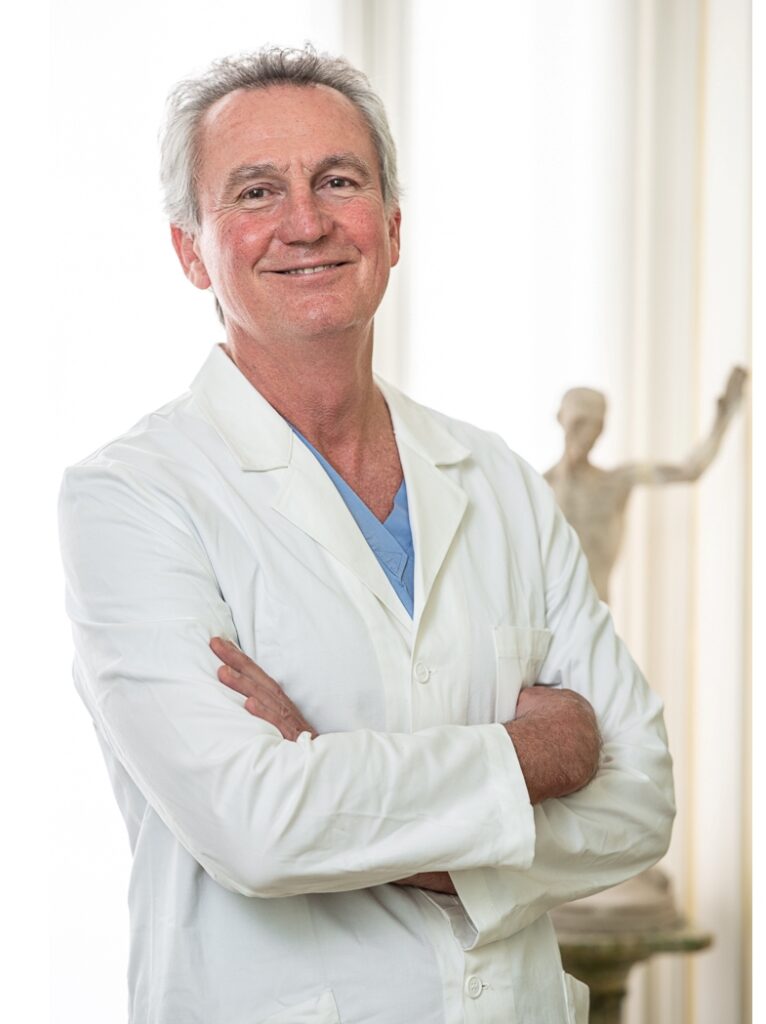
“Particularly on social media, this discipline and profession are often trivialised, leading the public to perceive cosmetic surgery as a minor touch-up, a term we would like to eliminate altogether.”
The SICPRE President emphasises that becoming a plastic surgeon requires extensive training, including five years of specialist education, expertise in both reconstructive and aesthetic surgery, and continuous professional development.
“The profession of plastic surgery requires training in both reconstructive and aesthetic surgery, because the two disciplines complement each other.”
Behind every procedure lies not only technical skill, but also anatomical knowledge, clinical judgement and professional responsibility.
“These are often major surgical procedures that require a solid foundation of knowledge, professional expertise, integrity and ethics.”
When all of this is reduced to promotional content, there is a risk that the public may also underestimate the medical nature of the procedure.
The Problem of Artificial Beauty Standards
Social media does not merely influence how cosmetic surgery is portrayed. It can also contribute to shaping the beauty standards people aspire to achieve.
According to Berrino, artificial aesthetic ideals are promoted from an increasingly young age, potentially distancing people from the principles of harmony and individual physical characteristics.
“Unfortunately, somewhat artificial beauty standards are being promoted from a very young age.”
The President refers, for example, to excessively large breasts, highly accentuated lips and particularly prominent cheekbones: features that may become ideals to imitate, regardless of an individual’s natural anatomy.
It is in this context that one of the interview’s most significant reflections emerges.
“In reality, cosmetic surgery should aim to create beauty that goes unnoticed.”
For Berrino, the outcome of a procedure should not necessarily be recognisable as the result of surgery. Instead, the goal should be to achieve a harmonious result that respects the patient’s anatomical characteristics and the realistic possibilities of the procedure.
This perspective contrasts with the pursuit of increasingly dramatic transformations, which are often amplified by the visual nature of social media communication.
Plastic Surgery on Social Media: Where Does Information End and Advertising Begin?
Social media can be a valuable tool for bringing medical knowledge closer to the public, explaining procedures and sharing reliable information.
The problem arises when educational content becomes blurred with commercial promotion.
“It is an interesting question, and not an easy one to address, particularly from a regulatory perspective,” Berrino observes when discussing the boundary between information and advertising.
The SICPRE President draws attention to professional ethical standards and the regulations governing healthcare communication, highlighting concerns surrounding discounts and promotional messages.
“Very often, communication operates on the borderline between promotion and overly simplified educational information.”
For Berrino, one of the most important objectives should be helping the public recognise the difference between rigorous scientific communication and messages designed primarily to attract patients.
Informative content should explain what a procedure involves, who may be a suitable candidate, what its limitations are and which risks need to be considered.
Predominantly commercial communication, on the other hand, may focus on the desired outcome while minimising the less appealing aspects of surgery.
Easy, Risk-Free Procedures Suitable for Everyone: The Danger of Online Promises
According to Berrino, some of the most problematic messages are those that portray cosmetic procedures as straightforward treatments suitable for anyone, with no particular difficulties involved.
“Trivialising a surgical procedure by promoting it for commercial purposes as easily accessible, free from complications and suitable for everyone is clearly an approach that must be absolutely avoided.”
The risk concerns not only how surgery is represented, but also the decisions people may make based on that information.
Presenting a procedure as simple and without consequences can diminish awareness of the risks and create expectations that fail to take the patient’s individual characteristics into account.
“It is this type of commercial promotion that encourages patients to undergo surgery without being fully aware of the potential complications and limitations of the procedure, which are equally important.”
For this reason, according to the SICPRE President, communication should always maintain a medical perspective, even when using immediate and visually engaging platforms such as social media.
Clarity does not mean making surgery appear trivial. It means being able to explain even its most complex aspects in an accessible and understandable way.
Before-and-After Photos: The Best Result Is Not the Same for Everyone
Among the most common types of content shared on plastic surgeons’ social media profiles are before-and-after photographs comparing the results of a procedure with the patient’s initial appearance.
These images can attract attention, but they require particular caution when being interpreted.
“Every result and every patient is different,” Berrino points out.
Pre-existing conditions, anatomical characteristics and technical possibilities all influence the outcome of a procedure. It is therefore incorrect to assume that a result achieved in one patient can automatically be reproduced in another.
“It is not possible to offer the same pre- and postoperative outcome to everyone.”
The SICPRE President also highlights a less obvious consideration: an image can be entirely authentic while still failing to represent the outcome that a prospective patient can reasonably expect.
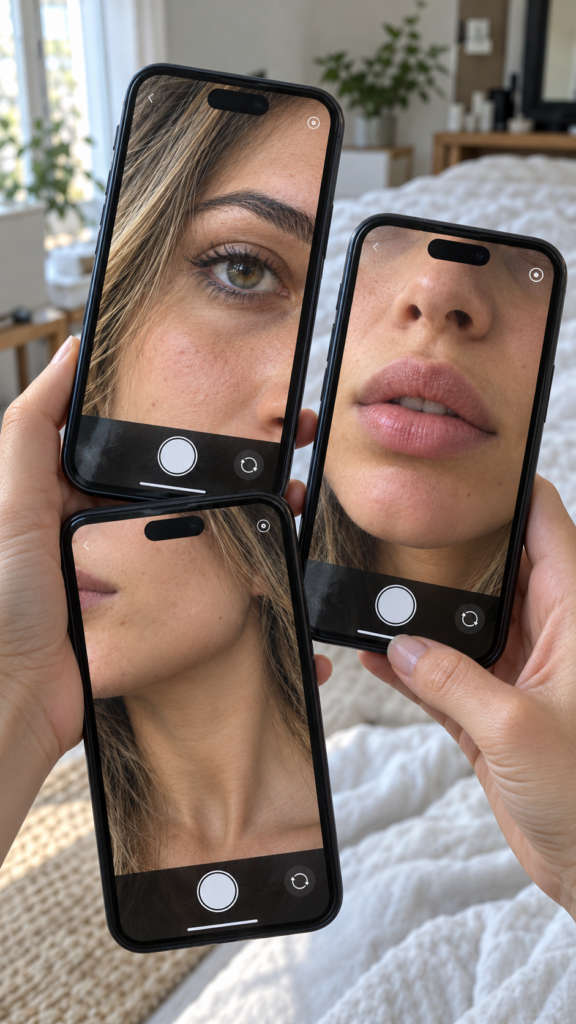
“Of course, every surgeon can showcase on their website the best case they have achieved in their career, but that is not the standard result, and it may not even be achievable for the particular patient viewing those images.”
The point, therefore, is not simply to avoid altered or misleading photographs, but to prevent exceptionally favourable outcomes from being interpreted as promises.
Images can document a clinical experience, but they cannot replace an individual medical assessment.
The Narrative and Responsibility of Plastic Surgeons
For Berrino, combating the trivialisation of plastic surgery is also one of the objectives of scientific societies.
The SICPRE President points out that public attention to safety often increases only when particularly serious incidents occur.
“Unfortunately, this aspect is discussed only, or mainly, when a serious incident takes place.”
However, issues surrounding communication and the quality of medical care cannot be addressed exclusively in response to adverse events.
According to Berrino, it is essential to build broader and more consistent public awareness of the value of professional expertise.
“It is the responsibility of the scientific society to raise public awareness that these are procedures requiring professional expertise.”
This commitment also involves physicians’ ability to use social media as an educational tool without reducing their professional activity to a commercial offering.
Beyond Social Media: Putting Medicine Back at the Heart of Plastic Surgery
Pietro Berrino’s reflections highlight a contradiction in contemporary communication: while cosmetic surgery is becoming increasingly visible, its medical complexity risks receiving less and less attention.
The issue is not the presence of plastic surgeons on social media, but rather how procedures and their outcomes are portrayed.
Providing accurate information means explaining not only what a procedure can improve, but also what it cannot guarantee. It means acknowledging that every patient is different and that the outcome of surgery cannot be reduced to a particularly successful image.
In a digital world that rewards the most striking transformations, the challenge is to highlight what cannot always be captured in a reel: professional expertise, clinical judgement, ethics and responsibility.









Social Media, Cosmetic Surgery and the Risk of Trivialisation

Lymphoma: From Diagnosis to New Treatments, Every Patient Has a Different Journey

Breast Cancer: From Prevention to Treatment

Alzheimer’s and Ambiguous Loss: The Grief of Caring for a Loved One

Orthopedic Surgery, Robotics and Regenerative Medicine: What Changes for Patients

Plastic Surgery Between Innovation and Reconstruction: Bari Hosts the 74th SICPRE National Congress

Vascular Diseases: From Prevention to New Treatments

Regenerative Plastic Surgery: Our Own Tissues Become Treatment

Early Diagnosis and Gene Therapy: The Breakthrough Reshaping the Future of Newborns with SMA

Facelift Surgery: Respecting the Person’s Identity

Your skin is talking to you. Are you listening?

Body Fat: Removing It Is Not Enough

Respiratory Allergies: What Is Changing?

Treating the Wound to Support Surgical Success

Quality, safety, and trust: the value of ISO 13485 certification

Biorevitalization: Beyond the Promises of Creams

Trichology: what your hair can reveal about your health

Lipedema: it’s not enough to look at body weight

Lipoedema: The Unresolved Challenge of Delayed Diagnosis
Alzheimer’s and Ambiguous Loss: The Grief of Caring for a Loved One
Biorevitalization: Beyond the Promises of Creams
Respiratory Allergies: What Is Changing?
Quality, safety, and trust: the value of ISO 13485 certification
Regenerative Plastic Surgery: Our Own Tissues Become Treatment
Body Fat: Removing It Is Not Enough
Treating the Wound to Support Surgical Success
Facelift Surgery: Respecting the Person’s Identity
Plastic Surgery Between Innovation and Reconstruction: Bari Hosts the 74th SICPRE National Congress
Your skin is talking to you. Are you listening?
Early Diagnosis and Gene Therapy: The Breakthrough Reshaping the Future of Newborns with SMA
Breast Cancer: From Prevention to Treatment
Vascular Diseases: From Prevention to New Treatments
Orthopedic Surgery, Robotics and Regenerative Medicine: What Changes for Patients
Lymphoma: From Diagnosis to New Treatments, Every Patient Has a Different Journey