Medical doctors and Surgeons
Artificial Intelligence and plastic surgery: the future is already here

In the rapidly evolving landscape of medicine, artificial intelligence (AI) is establishing itself as a revolutionary tool even in highly specialised fields such as plastic and reconstructive surgery. Professor Roberto Cuomo, an associate professor at the University of Siena, who has long been active both in clinical practice and in research on the application of emerging technologies in surgery, explores the topic in depth.
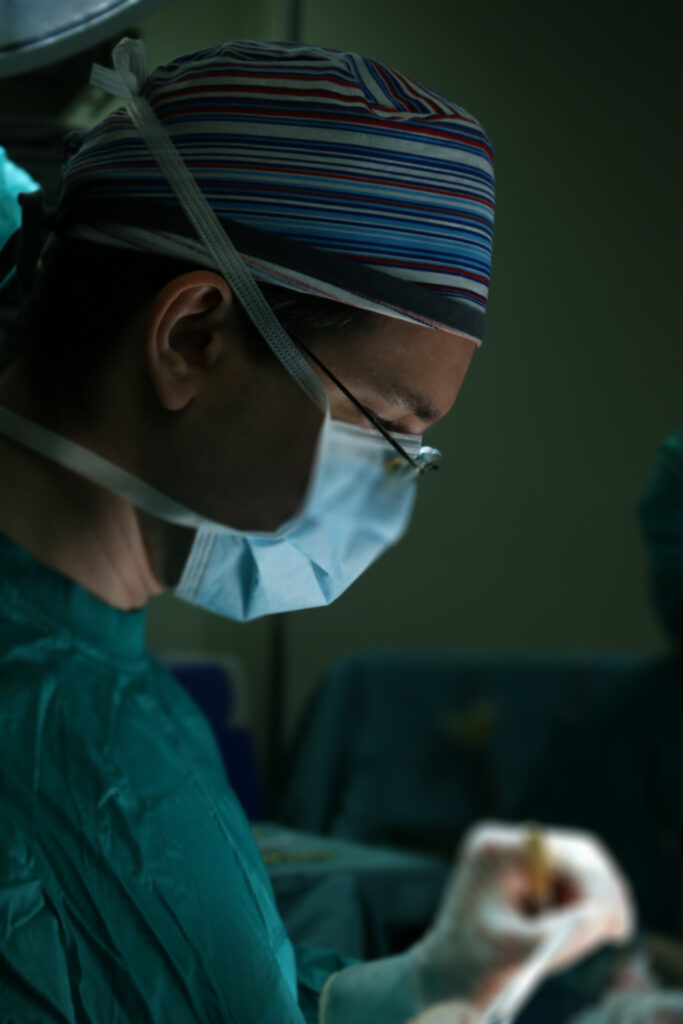
Artificial Intelligence is no science fiction
For Cuomo, talking about AI today means dealing with a tool that is already an integral part of clinical reality, even if it is often viewed with suspicion. «We’re used to thinking of artificial intelligence as something almost dangerous. In reality, it’s an evolution of so-called large language models, systems that organise and present information in a way humans can understand».
In practice, this means models capable of summarising scientific articles, solving complex problems, and even supporting medical decisions, all in a matter of seconds.
AI in the operating room: real experiments, concrete results
The research led by Cuomo, in collaboration with colleagues at the University of Melbourne, analyzed the effectiveness of chatbots like ChatGPT, Gemini, and DeepSeek in managing hand fractures. The goal? To understand whether these tools could truly help surgeons make timely decisions in emergency settings.
«We simulated various clinical scenarios to see how the models would perform» he explains. The result? ChatGPT proved to be the most accurate, although it sometimes «provided slightly redundant information, but still correct from a clinical and management point of view».
However, the revolutionary aspect lies not just in accuracy but in the speed with which these tools process and extract knowledge from enormous amounts of data.
Toward personalized rehabilitation
AI doesn’t stop at the operating room. It also extends into postoperative recovery pathways, where personalisation can make the difference between effective and frustrating rehabilitation.
«We asked ourselves whether it was possible to obtain, thanks to AI, guidance on optimal rehabilitation plans for complex procedures, for example in the head and neck area», Cuomo explains. The suggestions offered by the models were then compared with the opinions of field experts, confirming significant potential.
«These are tools that can reduce the workload for professionals. But let’s be clear: they will never replace the doctor. In fact, to use them well, increasingly up-to-date skills will be needed».
Between risks and responsibilities
The professor is unequivocal when it comes to the dangers of excessive automation: «Leaving a clinical decision to a machine is madness. Surgery and medicine are made of intuition, nuance, sensitivity. That cannot be replicated by an algorithm».
For him, the doctor must remain at the center of the decision-making process—not only for ethical reasons, but out of clinical necessity.
He gives the example of flu season: a thousand patients with fever may hide a variety of underlying conditions. «An experienced doctor knows when something doesn’t add up. Human intelligence is irreplaceable in this kind of discernment».
The future? A team of human and machine
Looking ten years ahead, Professor Cuomo has no doubts: artificial intelligence will be an integral part of surgery. «Just as today tools like CT scans and ultrasounds seem normal to us, in ten years it will be normal to use software that analyses clinical data in real time. But the final decision will always belong to the professional».
Even in the most complex procedures, he notes, they have already tested AI model support under simulated stressful conditions. «In those moments, having an objective aid can be invaluable. But it’s the surgeon, with their experience and intuition, who makes the difference».
Technology as a servant, not a master

Artificial intelligence is changing the face of plastic and reconstructive surgery, but not its soul. For Professor Cuomo, the direction is clear: integration, not replacement. Ever more powerful tools will be at the service of skilled hands and trained minds. And in this balance between innovation and humanity lies the true future of medicine.







Lymphoma: From Diagnosis to New Treatments, Every Patient Has a Different Journey

Breast Cancer: From Prevention to Treatment

Alzheimer’s and Ambiguous Loss: The Grief of Caring for a Loved One

Orthopedic Surgery, Robotics and Regenerative Medicine: What Changes for Patients

Plastic Surgery Between Innovation and Reconstruction: Bari Hosts the 74th SICPRE National Congress

Vascular Diseases: From Prevention to New Treatments

Regenerative Plastic Surgery: Our Own Tissues Become Treatment

Early Diagnosis and Gene Therapy: The Breakthrough Reshaping the Future of Newborns with SMA

Facelift Surgery: Respecting the Person’s Identity

Your skin is talking to you. Are you listening?

Body Fat: Removing It Is Not Enough

Respiratory Allergies: What Is Changing?

Treating the Wound to Support Surgical Success

Quality, safety, and trust: the value of ISO 13485 certification

Biorevitalization: Beyond the Promises of Creams

Trichology: what your hair can reveal about your health

Lipedema: it’s not enough to look at body weight

Lipoedema: The Unresolved Challenge of Delayed Diagnosis

After weight loss, the body changes twice: the role of plastic surgery in body contouring
Alzheimer’s and Ambiguous Loss: The Grief of Caring for a Loved One
Biorevitalization: Beyond the Promises of Creams
Respiratory Allergies: What Is Changing?
Quality, safety, and trust: the value of ISO 13485 certification
Regenerative Plastic Surgery: Our Own Tissues Become Treatment
Body Fat: Removing It Is Not Enough
Treating the Wound to Support Surgical Success
Facelift Surgery: Respecting the Person’s Identity
Plastic Surgery Between Innovation and Reconstruction: Bari Hosts the 74th SICPRE National Congress
Your skin is talking to you. Are you listening?
Early Diagnosis and Gene Therapy: The Breakthrough Reshaping the Future of Newborns with SMA
Breast Cancer: From Prevention to Treatment
Vascular Diseases: From Prevention to New Treatments
Orthopedic Surgery, Robotics and Regenerative Medicine: What Changes for Patients