
Medical doctors and Surgeons
Anomalous fat on the legs: it could be lipoedema

Lipoedema is a condition that has drawn the attention of the medical community in recent years. It is a chronic disease characterised by an abnormal accumulation of fat in the lower limbs, often developing asymmetrically. We discussed this with Dr. Gianluca Sapino, a specialist in reconstructive and aesthetic plastic surgery at the University Hospital of Lausanne, to explore the importance of early diagnosis and, most importantly, the treatments and surgical perspectives related to lipoedema.
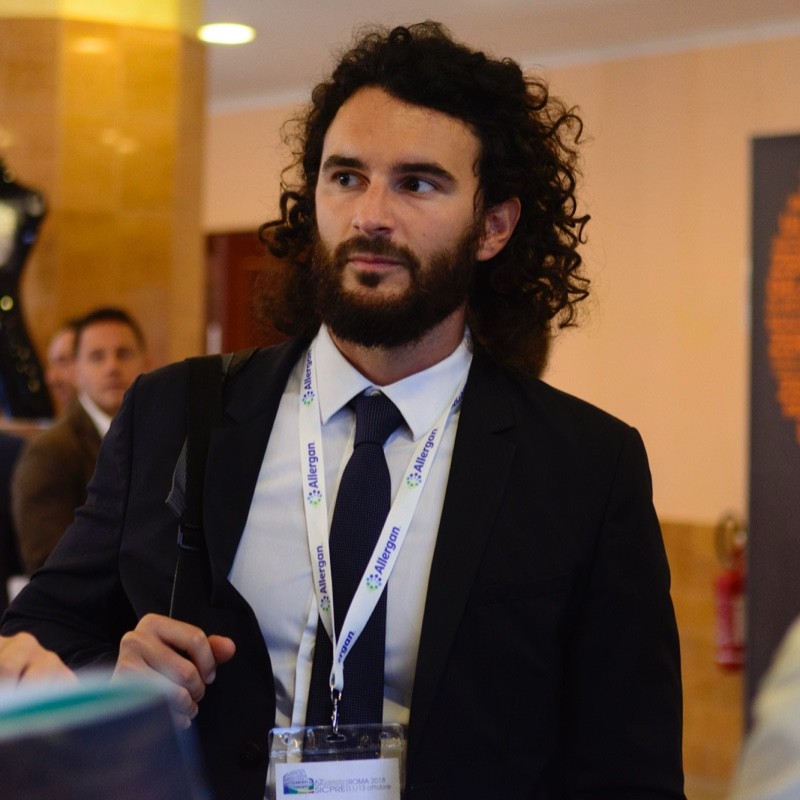
«Lipoedema refers to an inflammatory condition of the adipose tissue, primarily localised in the lower limbs but also affecting the upper limbs. This condition causes chronic pain for affected patients – as explained by the surgeon – It is a debilitating pathology that poses significant challenges in daily life, impacting even simple activities such as walking».
At the moment, there are no specific texts to detect the disease. «Typically, there is an excess of adipose tissue, even in comparison to the rest of the body, which localises in the lower or upper limbs – explains the doctor – Individuals with lipoedema often experience bruising or discoloration even in the absence of trauma, accompanied by heightened pain, even with superficial palpation», Sapino continues.
Lipoedema: the recommended treatments
The first approach to lipoedema is conservative treatment. «Almost all patients, following a lipoedema diagnosis, begin conservative treatment overseen by angiologists and/or physiotherapists, involving the use of compression garments», Sapino adds. This aims to mechanically reduce swelling in the affected area. While not curative, this treatment can provide significant relief to patients, provided that it is «Intensive and lasts for at least a year». The goal is to reduce inflammation of these adipose cells and consequently alleviate the symptoms.
Surgical intervention becomes an alternative when conservative treatment is not sufficient or when the patient requires more decisive interventions. «One can resort to liposuction with ultrasound, the injection of aqueous solutions, or the so-called Power Assisted Liposuction (ndr. removal of adipose tissue from the body during general surgical procedures)».
Different technologies that allow the surgeon to remove specific and precise areas affected by this type of dystrophy.
Lipoedema and lymphedema: let’s clarify
It is crucial to distinguish lipoedema from lymphedema, as both conditions present similar symptoms but they have different causes. While Lipoedema is linked to an abnormal proliferation of adipose tissue, lymphedema is caused by a defect in the lymphatic drainage. Correct diagnosis is crucial for effective treatment: «In patients where the lymphatic system is perfectly functional, lipedema is diagnosed – clarifies Sapino – On the other hand, when the enlargement of the limbs is not related to atypical and abnormal proliferation of adipose tissue but rather to a defect in lymphatic drainage, it is diagnosed as lymphedema».
As of today, the vast majority of patients with lipoedema are females. «It is supposed that there is an influence not only of a genetic nature but also environmental, likely hormonal, in the genesis of this type of pathology – reports the surgeon – It is interesting to note that, although it is a relatively recent condition, the prevalence is continually increasing. As of today, it is estimated that one in eight or nine females may be affected by this type of dystrophy».
From a surgical perspective, «The liposuction procedure in individuals affected by lipoedema is continually improving. This is because the condition is relatively recent, and treatment adapts to the patients’ needs». These patients often require multiple surgery sessions due to facing advanced cases. «Sometimes due to delayed diagnosis – Sapino assesses – A single surgery is not always sufficient to address the condition. Often, these surgeries need to be planned three to four months apart, allowing for the resolution of a significant portion of the problem».













Transcending borders: how Italy and Australia deal with cancer of the skin

ActionAid and the fight against female genital mutilation

Mastopexy with or without implants?

Female genital mutilation: between violence, culture, and surgical reconstruction

IX ANISC Congress 2025: breast surgery in a changing world

Facial Feminization: surgery, identity, and ethical boundaries

Eyelids, when to intervene: oculoplastic surgery between function and aesthetics

Abdominal diastasis: a book to clarify the issue

Palliative care and oncology: an integrated and human approach

Healing starts with a mole: Melanoma Day and the power of prevention

PAP Flap: a cutting-edge technique in breast reconstruction

Breast anomalies: the masterclass in Florence on tuberous breasts, asymmetries, and dystopias

Indocyanine Green: the quiet innovation in breast surgery

Abdominal diastasis: causes, symptoms, and solutions

Volunteering and healthcare, a healing alliance: the Borgomanero Experience

Mastodynia: When Breast Pain Affects Daily Life

Difficult wounds: treatments, causes, and cutting-edge solutions

Reverse expansion: the autologous breast reconstruction method

Breast reduction surgery for a new balance
Difficult wounds: treatments, causes, and cutting-edge solutions
Mastodynia: When Breast Pain Affects Daily Life
Indocyanine Green: the quiet innovation in breast surgery
Abdominal diastasis: causes, symptoms, and solutions
Volunteering and healthcare, a healing alliance: the Borgomanero Experience
Breast anomalies: the masterclass in Florence on tuberous breasts, asymmetries, and dystopias
PAP Flap: a cutting-edge technique in breast reconstruction
Healing starts with a mole: Melanoma Day and the power of prevention
Palliative care and oncology: an integrated and human approach
Abdominal diastasis: a book to clarify the issue
Eyelids, when to intervene: oculoplastic surgery between function and aesthetics
Facial Feminization: surgery, identity, and ethical boundaries
IX ANISC Congress 2025: breast surgery in a changing world
Female genital mutilation: between violence, culture, and surgical reconstruction
Mastopexy with or without implants?
ActionAid and the fight against female genital mutilation